
Barendsen consciously chooses the green Red Naomi
By Marck Limmen
By taking customers to growers and allowing them to see first-hand the sustainability measures being implemented, Barendsen helps to challenge negative perceptions and build support for further sustainability improvements across the sector.
Negative publicity surrounding flower holidays in Switzerland often contrasts with the day-to-day reality at Dutch growers, where continuous efforts are being made to produce more sustainably. Barendsen recently took an important customer to visit Porta Nova. The customer gained insight into the sustainability measures being implemented and became convinced of the strength of Dutch horticulture.
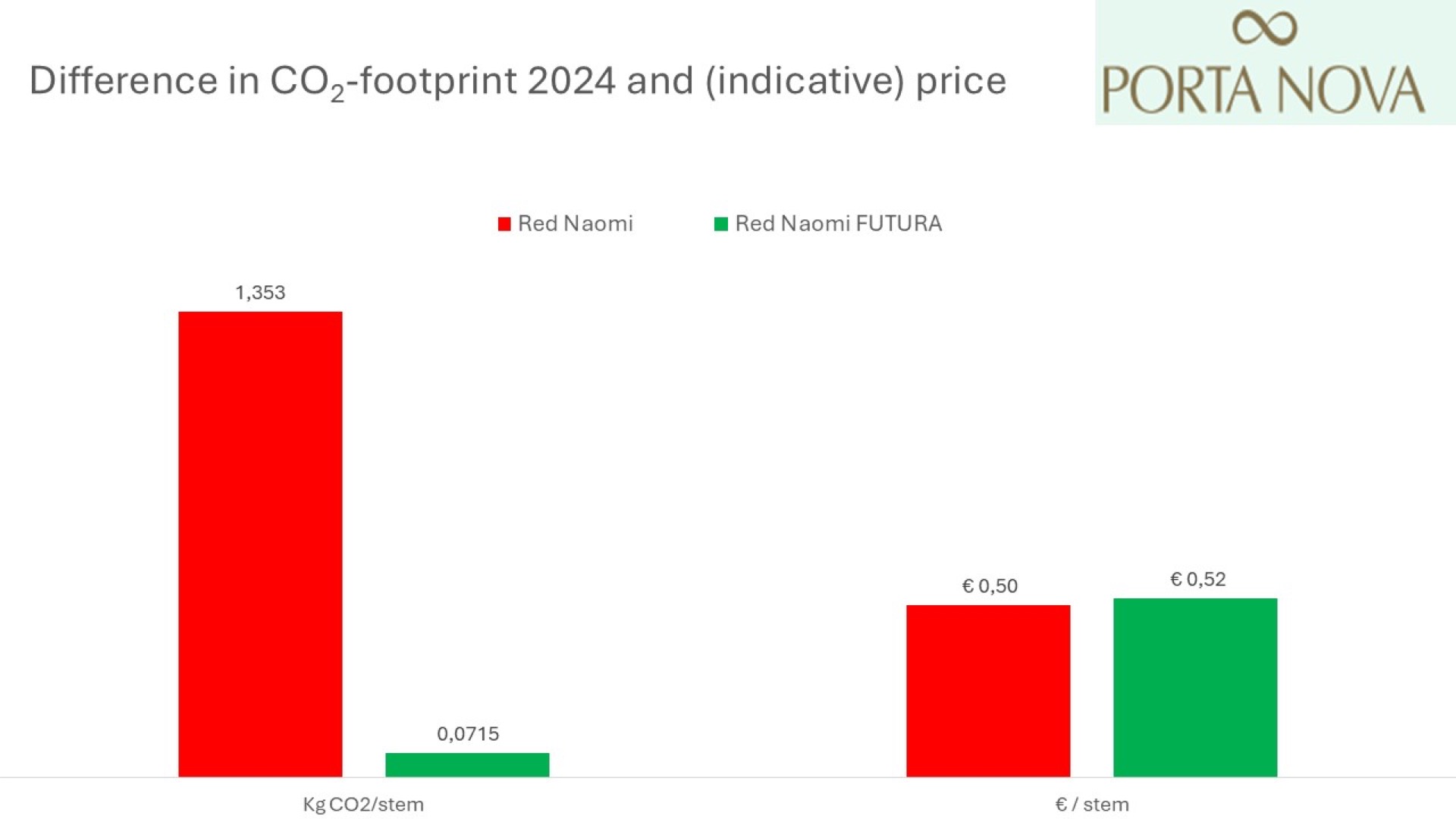
Porta Nova is leading the way in the sector. As one of the first growers, they calculated their CO₂ footprint in accordance with the FloriPEF methodology. Since then, their footprint has been reduced from 1.3 kg CO₂ to 70 grams CO₂ per stem, for only a limited additional cost (approximately €0.02). Across the supply chain, this investment is shared collectively: Barendsen now purchases the green Red Naomi for all customers and absorbs €0.01 of the additional cost, while the remaining €0.01 is passed on to the customer.
What can we learn from this?
The largest share of DFG’s footprint is generated during the cultivation of flowers and plants (56%). For this reason, DFG encourages growers to calculate and share their footprint using the FloriPEF methodology. Investing in sustainability is most effective when it takes place at grower level, as the entire supply chain benefits. This creates opportunities and highlights the importance of collaboration: growers are willing to invest when there is a clear commercial perspective in return.